

Improving your playing speed as a guitarist can be frustrating at times, but rewarding in the end. It is a journey that combines practice, technique, and smart self-analysis. Whatever instrument you play, becoming faster and cleaner takes commitment and the right approach. Use this guide to learn how to develop faster fingers, better accuracy, and new skills.
Practice, Practice, Practice!
This is usually the first recommendation for learning any skill, and for good reason. Consistency beats intensity. Daily, diligent practice is crucial for improving guitar playing speed. Practicing every day, even for shorter periods, is far more effective than long, sporadic sessions. Over time, this builds muscle memory, confidence, and speed.
Challenge Yourself with New Songs or Styles
Playing challenging songs is essential for growth. Choose pieces just outside your comfort zone. This helps stretch your skills and pushes your technique forward. Difficult songs force you to solve new problems, encouraging you to refine your movements and sharpen your focus.
Benefits of Trying New Styles of Music
Exploring diverse musical styles offers opportunities for new challenges and techniques. Try exploring unfamiliar genres like jazz, metal, or classical to pinpoint the skills that require the most attention. These styles might have unique rhythms or picking patterns that require you to adapt and develop your speed in new ways.
Mix Familiar Songs With Improvisation
Practice sessions should ideally balance familiar skills and new techniques. Playing songs or exercises you already know is a great way to warm-up. Once you’re in a good groove, you can start improvising. Improvising, or making up your own parts, forces your brain and fingers to adapt quickly. These quick changes help boost confidence and adaptability. Musical improvisation has even been shown to enhance brain function and cognitive skills.
Pro Tip: Record Yourself and Analyze the Waveform: Recording your practice sessions is one of the best ways to track progress. Listen back and, if possible, look at the audio waveform on a computer or phone. You can often see where notes are not consistent or where your timing slips. This helps you identify specific areas to work on.
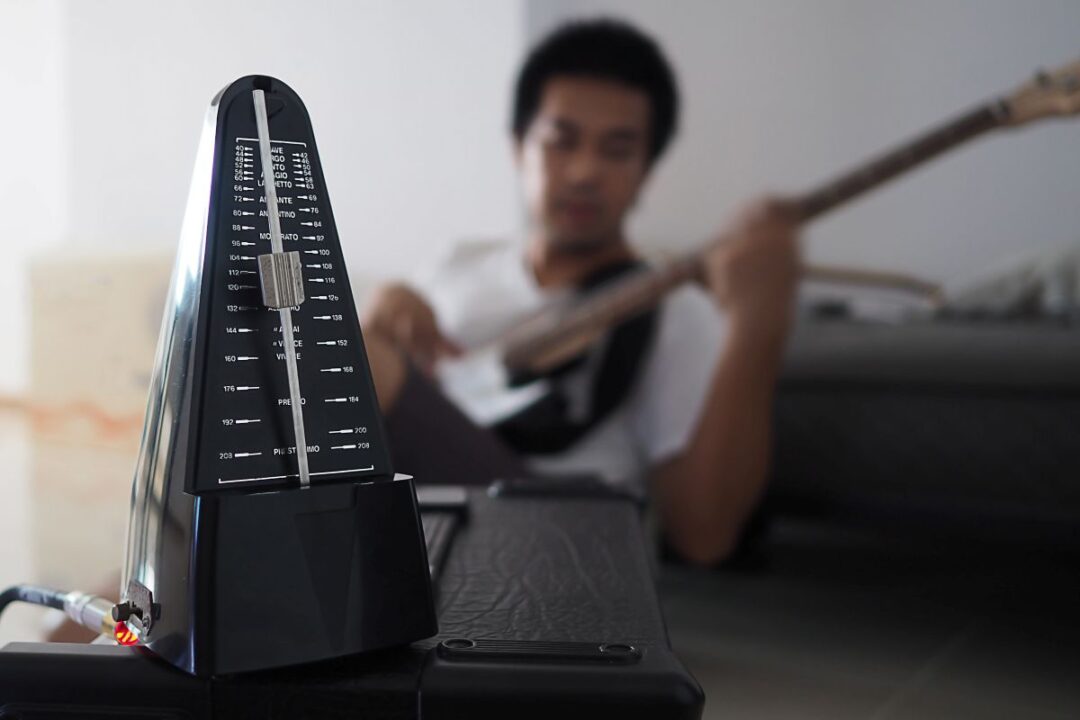
How to Use a Metronome to Improve Guitar Playing Speed
A metronome is your best friend when trying to play faster and more accurately. It gives you a clear, steady tempo, helping you develop internal timing and keep your playing even.
- Start Slow: Start by setting the metronome at a slow tempo, below your maximum speed.
- Practice: Play your part cleanly, making sure every note is in time. It’s perfected once you’re able to play it perfectly more than one time.
- Speed Up: Once you‘ve perfected the song at the first tempo, it’s time to ramp up. Increase the speed by five beats per minute.
- Repeat: Repeat the process: play clean, then raise the tempo again.
This step-by-step approach helps you avoid building bad habits and encourages steady progress.
Tip: If you rush to higher tempos too soon, your playing may become sloppy. Stay patient and only increase speed when you are fully comfortable.
Exercises for Better Finger Dexterity
Building finger dexterity is key for playing fast. Simple exercises like chromatic runs can work wonders. A chromatic run on the guitar is when you play every all 12 notes on a any string of your guitar. This is a fundamental exercise for beginners and professionals alike.
Another way to build dexterity is by practicing moving your fingers independently. The goal is to get each finger to act separately, rather than relying on stronger fingers to do most of the work.
How to Improve Finger Strength for Guitarists
Finger strength supports speed. Squeezing a tennis ball or using hand grippers can help, but the best way is to practice scales and arpeggios with controlled, deliberate pressure. Make sure every note rings clearly. Focus on fretting each note with just enough force to make it sound, avoiding excess tension.
Is Your Guitar Action Too High?
If you’re still struggling to consistently hit every note, you might want to evaluate whether your guitar is set up for success. Check your instrument’s action. Action is the distance between the strings and the fretboard. High action makes it physically harder and slower to play. Adjusting the action slightly can make a big difference in speed and comfort. Fixing the action on your own will depend on your familiarity with your guitar’s truss rod. If you’re unsure how to safely adjust the action, you’ll need to take your instrument to a professional luthier for a full evaluation and tune up.
Top 3 Guitar Skills to Practice for Faster Playing Speed
There are several specific skills to focus on if you want to play faster.
- Alternate Picking
For string players, alternate picking (down-up-down-up) is essential for speed. It keeps your hand moving efficiently and evenly. Practice scales, arpeggios, and songs with strict alternate picking, starting slow and building up with a metronome.
- Minimizing Movements Between Notes
The less your fingers move, the faster you can play. Try practicing in front of a mirror. Watch your hands and see if you are lifting your fingers higher than needed. Try to keep every movement as small and efficient as possible. Over time, this will make a big difference in your speed.
- Good Playing Posture
Posture affects speed. Sit or stand in a way that allows your hands and arms to move freely. If you are tense or hunched, your muscles will tire more quickly, and your speed will suffer. Keep your shoulders relaxed and your wrists straight as much as possible.
Tips for Tracking Progress and Improving Precision
Precision Over Speed
Precision is more important than raw speed. It is not productive to get frustrated by small mistakes. Everyone makes errors, especially at higher tempos. The goal should be incremental improvement, not perfection overnight. As you raise the tempo, you might feel like you are back at square one and making more mistakes. That is normal. Focus on playing cleanly, even if it means slowing down again for a while.
Take Breaks During Long Practice Sessions
Playing fast can be tiring. Take regular breaks during long practice sessions. If you push through fatigue, your technique and timing will suffer, and you could even injure yourself. Short, focused practice sessions with breaks in between are more effective than long, exhausting sessions.
Relaxation Is Key
Tension is the enemy of speed. If your hands, arms, or shoulders feel tight, stop and shake them out. Stretch your fingers and wrists gently. The best players look relaxed and effortless, even when playing fast. Aim for that same feeling in your own practice.
Consistency and Patience Win
Improving your playing speed is not a race. It takes consistent effort, smart practice, and plenty of patience. Remember to challenge yourself, use your metronome wisely, and focus on precision and relaxation. Every step forward is progress, even if it feels small.
Turn Your Passion for Guitar into a Professional Career
At Guitar Craft Academy in Nashville, you’ll gain the hands-on experience, technical skills, and insider knowledge that set true professionals apart. Our specialized six-month Guitar Luthier Program is designed to help students turn their passion for guitars into a real career. From building instruments from the ground up to confidently taking on repairs and setup, you’ll train in an industry-standard workshop with expert instructors by your side.
Ready to start shaping your future in the music industry?
Fill out the form below to request more information about Guitar Craft Academy and learn how you can launch your journey as a guitar luthier with us.